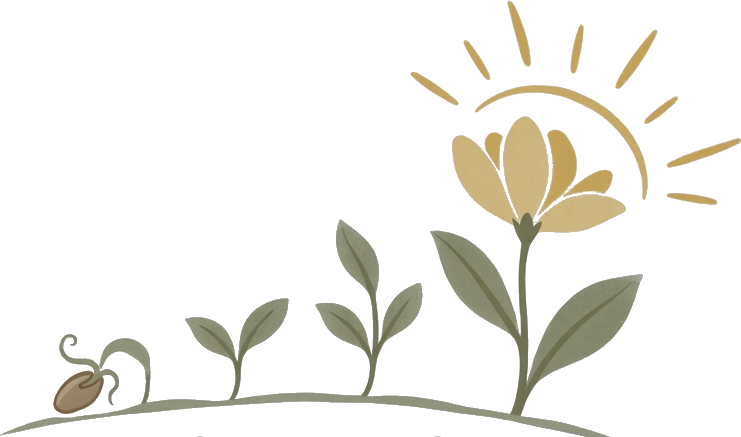
The blooming
process.
The bloom is not the goal. The bloom is part of the process. The teacher's role is not to force it — it is to create the conditions for growth.
Capable.
Curious.
Already becoming.
Little Bloom is play-based and Reggio-inspired. Children are treated as capable thinkers. Teachers guide, collaborate, and observe. Projects emerge from children's interests. The environment participates in learning, and documentation makes thinking visible.
We also value Montessori-informed practices: independence, accessible materials, practical life, concentration, care of environment, and respect for what children can do.
Little Bloom is not presented as a Reggio Emilia school or a Montessori school. This is its own approach, shaped around the children and community here.
what is
growing.
Notice
Before children can understand something, they learn to notice it. A shadow. A sound. Someone's expression. A seed changing. A pattern. A question. Attention is the beginning of learning.
Wonder
What is that? What happens if? Why? Teachers do not rush to provide answers. Questions become invitations.
Explore
Children learn with their whole bodies. They build, dig, sort, count, move, paint, garden, cook, listen, take things apart, put them back together, try.
Create
Children turn experience into ideas. There should not be twenty identical pieces of art on a wall. Twenty children can meet the same idea and make twenty different things.
Share
Learning happens between people. Children practise explaining ideas, listening, collaborating, negotiating, helping, and saying what they need.
Reflect
What happened? What changed? How did that feel? What would you try next? Reflection is the beginning of self-awareness, gratitude and contemplation.
Notice Again
Development isn't linear. Children revisit ideas with new abilities and new perspectives. The cycle continues.